




Archaeology Lecture: Bronze Age Casting Molds from Hösbachit
More Widespread Than Previously Thought?
The production and processing of bronze are among the most significant technical developments of the era that gave it its name: the Bronze Age.
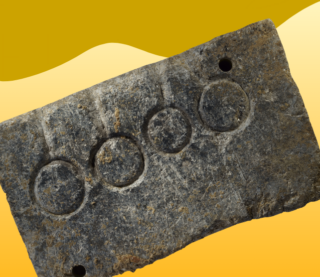
In their lecture on September 25, 2026, at 7:30 p.m. at the Museum of Franconia, Marcel Honeck of the University of Würzburg and Joachim Lorenz of Karlstein, specializing in archaeology and the history of technology, will highlight the far-reaching significance that an unassuming rock deposit held for Bronze Age craftsmanship—and the traces this material has left behind to this day.
How was metalworking organized? What tools were available to the craftsmen, and what techniques and raw materials were used to create the diverse bronze objects?
The lecture will first provide an insight into the fundamentals of Bronze Age metallurgy and the significance of metalworking. The focus will be on the organization of artisanal production, the tools used, and, in particular, the production of bronze objects through casting.
Special attention is given to a small rock deposit near Wenighösbach in the municipality of Hösbach in the Spessart region. Due to its unique properties, the rock found there was ideally suited for the production of casting molds. This material was already in use during the Bronze Age. Casting molds made from the Wenighösbach rock have been discovered both during archaeological excavations and as chance finds within a radius of up to 350 kilometers.
Lecture: Bronze Age Casting Molds Made from Hösbachite—More Widespread Than Previously Thought?
September 25
7:30 p.m.
Free admission
Register at: bs@museum-franken.de
