

Faience
Faience collection
The "Faience" section of the Museum für Franken collection currently comprises around 1,000 objects from mainly southern German manufactories and primarily covers the 18th century.
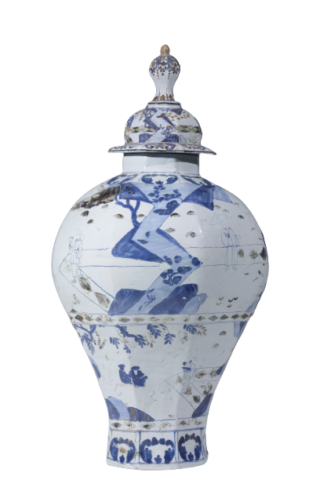
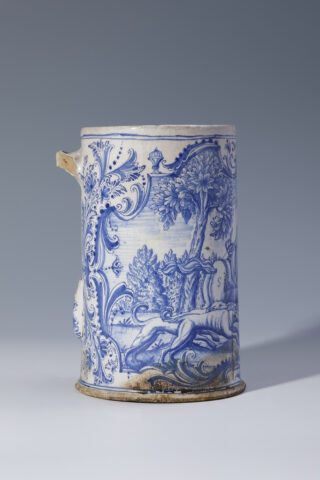
Faience refers to vessels and tableware made of fired clay that were coated with a tin glaze. Faience objects were particularly popular with the nobility and the upper middle classes. When the production of porcelain took off in Germany, more and more faience manufactories were closed.
The pieces in the collection of the Museum für Franken come mainly from the manufactories in Ansbach, Bayreuth and Nuremberg, as well as Frankfurt, Hanau, Schrezheim, Crailsheim and Künersberg. Together they are among the most impressive collections of southern German faience. The collection stands out not only for the number of pieces, but also for their craftsmanship and artistic quality.
Publication 2023:
Faiences from Ansbach, Nuremberg and Bayreuth. Inventory catalog of the Museum of Franconia 2023
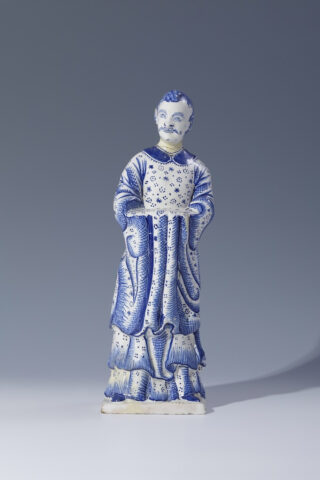
Faiences were mainly used as tableware, trays, vases and vessels for plants, and also served as elaborate table decorations, decorative figurine ensembles or wall paintings.
The faience collection of the Museum für Franken is one of the leading collections of southern German faience art.
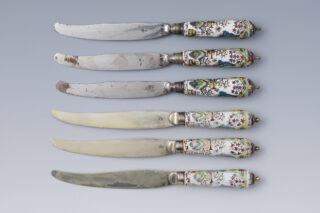
Particularly noteworthy are the objects from the Ansbach manufactory's "Green Family", whose bright green color remained a secret limited to a quarter of a century and known only in Ansbach.
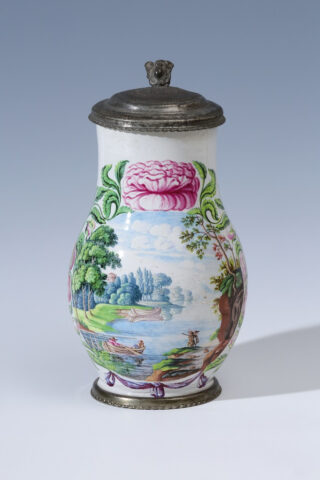
The collection of home-made faience also deserves a special mention: these vessels were already expensive unique pieces at the time of their creation, as they were decorated by artists who worked independently rather than for a manufactory. The muffle firing they used allowed for a wider range of colors, so that the Hausmacher faiences are known above all for their vibrant colors.
The pieces from the Würzburg porcelain manufactory preserved in the collection of the Museum für Franken are a particular rarity, as it only existed for five years and therefore only a few pieces were produced.
Today's faience collection of the Museum für Franken can only present a fraction of the original collection of the predecessor institutions - the Fränkisches Luitpoldmuseum and the Mainfränkisches Museum – as, according to current estimates, half of the faience collection was destroyed in the bombing of Würzburg on 16 March 1945. According to current estimates, half of the faience objects were destroyed or at least severely damaged in the bombing raid on Würzburg on March 16, 1945.